For Beginners
A few gentle places to begin drawing, painting, photography, or simply paying closer attention to the world around you.
Where to Begin
When you're just beginning, the idea of starting to draw, paint, or make time for creativity can feel intimidating — and sometimes overwhelming. It can be discouraging to admire beautiful artwork but not know where to begin, which materials to choose, or whether you're “doing it right."
Personally, I don’t spend much time worrying about “doing it right”, but I have experimented a lot and gradually developed the practices that support my work today. For the kinds of artwork that I create, I hope I can make the path feel a little simpler. I won’t be providing highly formal, academic resources. Instead, my aim is to make achieving an outcome approachable and accessible, while avoiding overwhelm and facilitating enjoyment.
Below, I’ve shared some resources and materials that have helped me along with some advice for you.
I hope they help you begin.
The sections below beginner-friendly—simple, actionable, and intentionally limited so that you leave feeling "I know where to get these supplies and can do a project this weekend."
— Monica
Resources and Supplies for Beginners
I’ve gathered a few, simple items for you to help get started and produce results. These things have worked for me personally. Use them in combination with the process I’ve given you below. It’s all geared toward beginners or anyone who wants to explore a different approach. When you purchase through these links, I may receive a small commission at no additional cost to you. Thank you for supporting my work, and please My Process below this section.
-
Choose something that interests you — birds, trees, flowers, clouds, reflections, architecture, garden objects, or changing light — and spend some time observing it carefully. You can be fully spontaneous and see what you see or you could plan a bit.
If you are interested in birds, I recommend just looking around. If you’d like, you could use a local field guide, an identification app, or perhaps a small pair of binoculars. For plants and landscapes, a garden, local park, or even your own neighborhood can provide endless subjects. You don’t need to go far.
The goal is just to see what captures your attention.
A walk
A phone camera
A few minutes of attention
If something continues to hold your attention, make a note of it. You may want to return to it later.
-
This is an important part of my approach.
Collecting gives you a way to hold onto an idea until the right time and the medium or approach becomes clear. It gives observations and visions a chance to mature.
You can collect in many ways, and do not need to use all of these. One is enough.
Start here:
phone camera
envelope for leaves and small items
folder for reference photographs
small, reused boxes
The goal is to hold on to things, revisit them, and allow ideas to mature naturally.
Keep what continues to intrigue you. You can return items like leaves, and feathers later and you can discard any digital photos that you no longer need.
-
Sketching is less about creating finished drawings and more about learning to notice and remembering what you saw.
Carrying a small sketchbook removes the pressure to create something important and replaces it with permission to simply observe.
Draw what is in front of you: the shape of a leaf, a coffee mug, shoes by the door, or the pattern of branches against the sky. Anything.
You can sketch quickly and loosely to capture shapes and relationships, or spend more time focusing on the details of a single object. The goal is not perfection. The goal is attention.
Start here:
a comfortable pen that writes smoothly in a variety of conditions and won’t leak in a bag or pocket
Drawn on the Way: A Guide to Capturing the Moment Through Live Sketching by Sarah Nisbett
As your confidence grows, you may enjoy experimenting with drawing or painting outdoors on larger papers.
-
Drawing begins with learning to observe and learning to see relationships, shapes, values, and edges.
Start with inexpensive paper and a set of artist pencils. The pencils matter more you might think — a range of hardnesses gives much more depth, contrast, and subtlety than a standard pencil.
A sketch pad, a set of graphite pencils, and a kneaded eraser are enough to begin developing your eye and technique.
Start here:
Look Closer, Draw Better by Kateri Ewing — Follow this method
When you're ready to create finished drawings, consider moving to higher-quality drawing paper with a beautiful tooth and surface that are more suitable for finished work.
-
Watercolor is beautiful to work with, but it behaves differently than many other media and can feel intimidating at first.
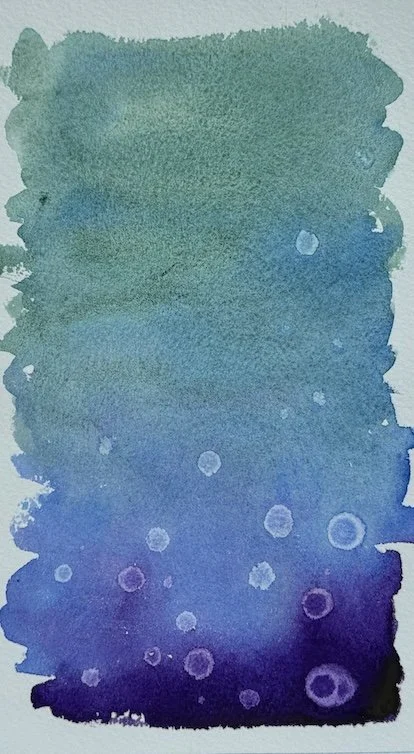
Begin with small, more abstract projects that help you learn how to move water rather than trying to create realistic paintings immediately. Leaves, skies, patterns, and simple exercises often make wonderful early watercolor subjects because they encourage experimentation without the pressure of perfection. Early success will help you feel accomplished and inspire you to return to it.
Good-quality paper, student-grade paints, and a small selection of brushes will make the experience far more enjoyable and less frustrating.
Start here:
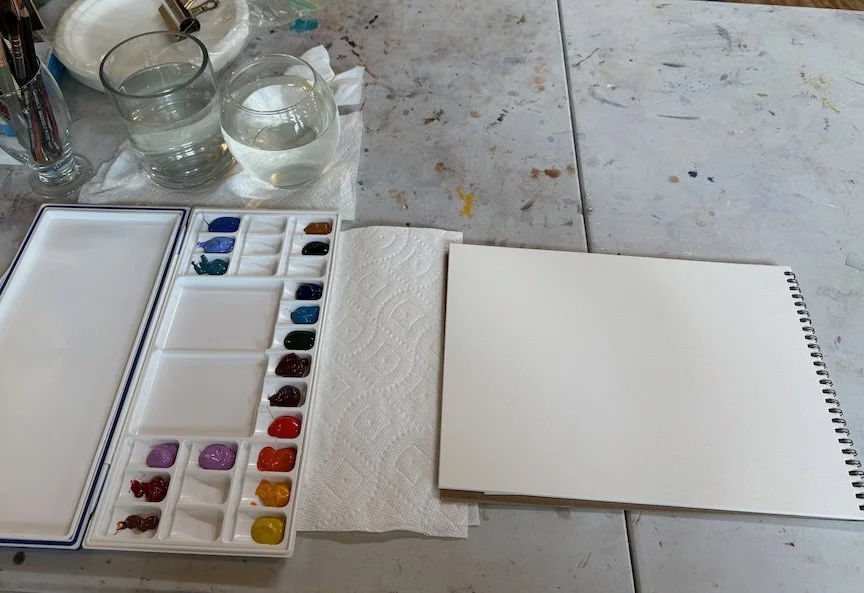
Quality watercolor tube set - I used Cotman for years before moving to professional grade.
Meeden paint palette with mixing tray - this is a quality palette worth the extra money with trying to mix. As a beginner, you could become very frustrated by beading paint.
Hahnemule cold-pressed watercolor paper - you may want to try less expensive paper, I quality matters a lot here and you’ll get better results
Princeton Snap brushes in size 2, 6, and 10 plus one Princeton Neptune size 4 brushto experiment with soft brushes.
Creative Watercolor and Mixed Media: A Step by Step Guide to Creating Stunning Effects by Ana Victoria Calderone.
As your confidence grows and you become more skilled, experiment with artist-grade paints, larger brushes, softer brushes, and additional papers to discover what suits your style and interests.
My Process
1
Notice
See what catches your attention.
It could be:
a bird at a feeder
the shape of a leaf
a reflection in the water
the colors of the sky
the texture of a tree
a piece of clothing or a sign
anything
You don’t need to know why it interests you yet, but themes and groupings will emerge with time.
2
Collect
Save the observation in whatever form feels natural.
You might collect it as:
a quick sketch
a photograph
a leaf or seed pod
a written note
a color swatch
a questions to investigate later
The goal is not to create artwork. You are simply holding on to the observation to return to later.
3
Revisit
When time and curiosity allow, return to what you collected.
This is where choice and creativity begin to emerge.
A collected leaf might become:
a live sketch
a graphite drawing
a watercolor painting
a cyanotype
a photography
just an interesting object that trains you to look more closely
Photograph can become many things:
a reference image for an object
a collection of photographs representing a place, subject, or mood
a focused work that can be progressed through a finishing step
Not every observation needs to become artwork. Some simply teach us to see and focus better.
4
Create
Choose a medium that suits the subject, space, and time you have available.
Sketches—
quick observations
drawing from life
no pressure to finish or “do a good job”
see Drawn on the Way by Sarah Nisbett
Drawings—
study carefully
structure your approach
use an artist pencil set and the method described in Look Closer, Draw Better (try the pear exercise)
experiment with introducing fantasy (like my bird in the footer)
Paintings —
mood
color
atmosphere
simple projects that give a sense of accomplishment the like pattern, skies or the projects in Creative Watercolor and Mixed Media
Photography —
store and use the image digitally
print at home or professionally
mat and frame it, if you choose
The goal is not to produce a lot. It’s to creatively express ideas and observations.
Remember — Art begins long before we make artwork, and not every observation becomes art.
The goal here is not to produce more, but to notice more and learn how to translate ideas and moods. Finished pieces will come with time.
In the meantime, enjoy the peace, focus, and quiet satisfaction of the practice itself.