Resources
for Observation, Learning, and Practice
Purpose
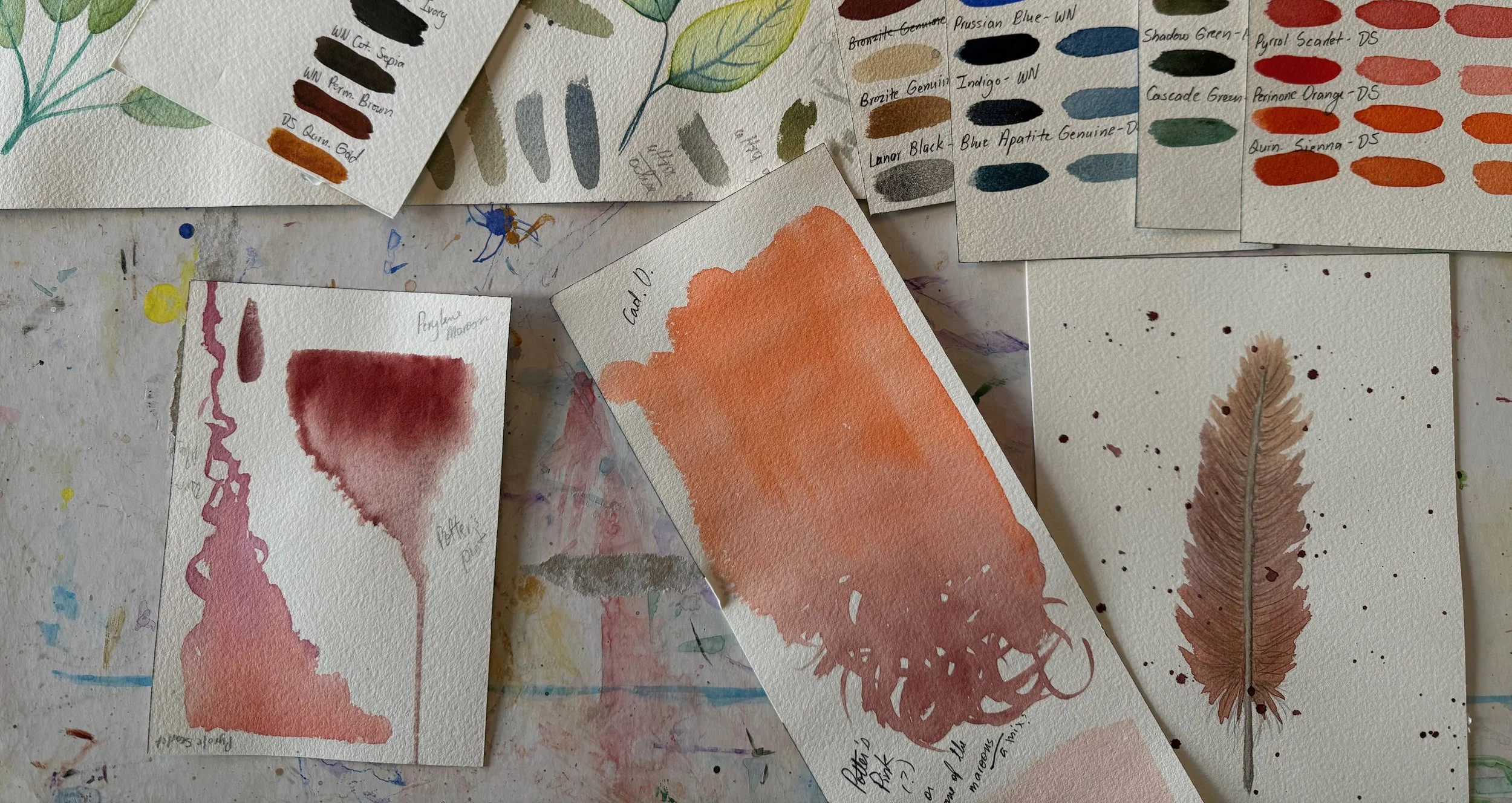
Whenever I am at markets or fairs, people ask whether I give lessons and about the books, materials, and tools I use. While I’m not able to take on teaching at the moment, I created this page to gather key resources that have supported my learning and artwork.
I’ve experimented a lot, and only recommend resources I have personally used and found valuable. The places listed are ones I find especially inspiring and conducive to slowing down and noticing.
For books, tools, and materials, I use Amazon links because they offer a simple, widely accessible way to share my recommendations. As an associate, I may earn a small commission from qualifying purchases at no additional cost to you. Commissions can help support this website and the creation of new work.
This page will continue to evolve as I discover new resources and revisit old favorites.
— Monica
Jump to Section
Books · Places · Tools for Observation · Materials and Supplies
New to art? Visit my Beginner's Page for a pared-back selection of materials, books, and guidance to help you get started.
Beginner’s Page
Books
Books have always been part of how I learn, develop, and get inspired. Below are some key recommendations.
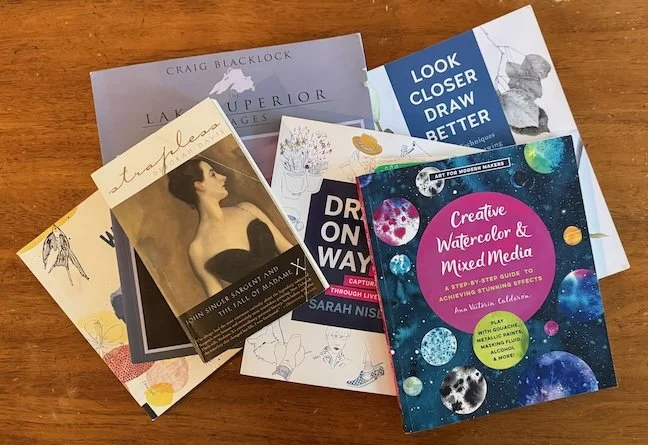
Drawn on the Way: A Guide to Capturing the Moment Through Live Sketching by Sarah Nisbett
This book convinced me not to wait for time to draw and to begin carrying a sketchbook. If you think you don't have time for art, this book offers practical ways to build observation and sketching into everyday life. As a benefit, I now have small booklets of observations and memories to show for it. View Book →
Creative Watercolor and Mixed Media by Ana Victoria Calderon
One of the reasons I like watercolor is that you can create so many textures and effects, and this book leans into that. It is approachable and great for beginners or anyone who wants to explore texture or be a bit more playful while still creating something beautiful. View Book →
Look Closer, Draw Better: Expert Techniques for Realistic Drawing by Kateri Ewing
This book taught me to use a wider range of graphite pencils and to think more carefully about how to approach a drawing. The exercises translate surprisingly well to watercolor and photography because they begin with observation rather than technique. View Book→
More Books I Recommend
-
In some ways, this book is a continuation of the themes explored in Creative Watercolor Mixed Media (above). However, toward the end of the book, some of the projects have a more sophisticated and distinctly vintage look. They are very beautiful and worth trying and experimenting with once you are a bit more comfortable. View Book →
-
This is an extremely approachable and simple “how to” book that allows you to create vibrant, cheerful results that you could happily display at home. There is absolutely no focus on perfection or accuracy. It even has very cute simple projects which could be done with markers (the colors and two-tip potions in this set are great) or a simple set of basic colored pencils (I’ve used this one for years). Beginners or kids can get great results by following this book. View Book →
-
This series is wonderful, even for kids to learn with. It begins with basic shapes and shows you how to refine to relatively well-finished line drawings. One of the things I like about it is that the series is organized by subject - Flowers and Plants, Animals, Birds, Bufferflies, and Other Insects, etc. - even Buildings and Architecture, Faces and Figures, Fantasy Creatures, and Manga and Anime. View Books →
-
Having loved John Singer Sargent’s painting from the time I first saw them, I couldn’t resist picking up this book while visiting the Metropolitan Museum of Art in New York City. The author explores the backstory behind one of Sargent’s most famous paintings and subjects. It’s a fantastic, researched story. I couldn’t put it down. I’ve recommended it to personal friends. View Book →
-
The photography in this book taught me to pay closer attention to composition and framing, lighting conditions, and the quieter details of natural subjects. I bought it nearly 30 years ago, and it’s still wonderful. You may have to find it used, but it’s worth the search. View Book →
-
This book is very approachable and could complement Drawn on the Way or replace it if you don’t feel comfortable drawing in public or if you need more structure when approaching subjects. Even more mature kids can follow it to get beautiful results. View Book→
Places that Encourage Observation
Below are a few places that have rewarded repeated visits and careful attention. The truth, however, is that you can simply walk outside and find remarkable things waiting to be noticed. I’m not affiliated with these places, just sharing.
Longwood Gardens (Kennett Square, PA)
Delaware and Raritan Canal State Park (New Jersey)
John James Audubon Center at Mill Grove (Mill Grove, PA)
Princeton University Art Museum (Princeton, NJ)
Georgia O’Keefe Museum (Santa Fe, NM)
Horicon National Wildlife Refuge (Fond du Lac, WI)
Corning Museum of Glass (Corning, NY)
William Morris Gallery (London, UK)
Green Mountain National Forest (Vermont)
Tools for Observation
I study things intentionally. Sometimes they are things I set out to find, such as birds or planetary conjunctions. Other discoveries are unexpected, such as interesting plants or patterns of light. Below are a few tools that help me observe and record.
ZEISS Terra ED Binoculars 10 x 42 Waterproof, Fast Focusing for Bird Watching
Good binoculars reveal details that would otherwise remain invisible, and this pair genuinely changed my ability to see. It quickly became one of my most-used tools for observation, and still sits next to my door to watch birds at and around my feeder. I take my binoculars on trips, canal walks, bike rides, hikes, etc. and have even used them to study the moon. View Here →
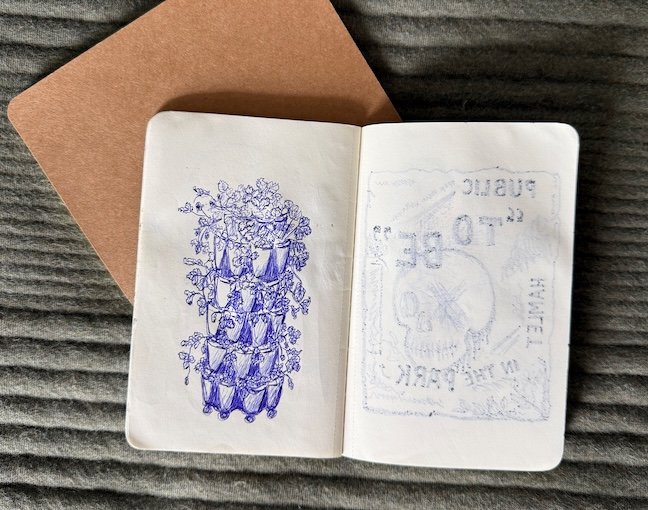
Carrying a small sketchbook removes the pressure of creating finished work and makes it easier to record observations wherever they happen. Mine contain everything from leaves and birds to chairs and advertising images. This small A6 size makes them easy to tuck into a bag and carry almost anywhere, and their low costs supports experimentation. View Here →
Caran D’Ache Ballpoint Pen, with SwissRide Medium Cartridge
I'm left-handed and an over-writer. My unconventional grip means pens can be surprisingly challenging. These are slightly thicker with a comfortable hexagonal shape that is easy for me to hold. They don’t roll away, have never leaked on me, and write smoothly across a range of temperatures, making them ideal for drawing on the go. View Here→
Materials and Supplies
I've experimented with many materials over the years and continue returning to a handful that feel especially intuitive and reliable. Below I focus on watercolor painting, drawing, and cyanotyping.
-
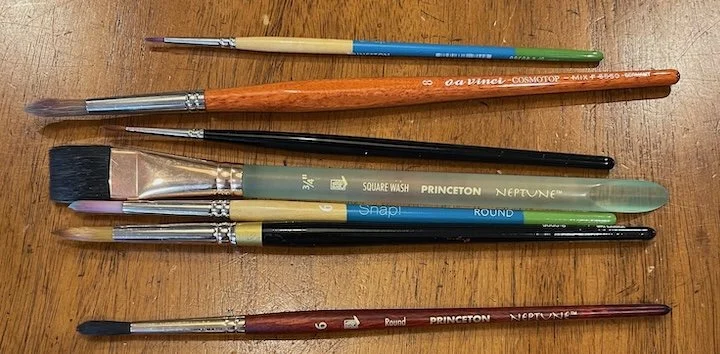
Princeton Neptune Round and Quill Brushes are my brushes of choice for most watercolor work. They hold water beautifully and simplify the painting process. I also appreciate their soft, slightly velvety wooden handles.
Round brushes can do most anything you need and a set will give options. I own this set of size 2, 6, and 10 round brushes with ¾ wash brush.
Quills are excellent for washes and larger paintings (I prefer them to flats). I use a size 4 and a size 8.
Princeton Snap Brushes are an excellent option for beginners. When I first started painting in watercolor, I struggled to get it to behave the way I expected and a slightly stiffer brush gave me more control. You can try:
-
Arches Cold-Pressed Watercolor Paper (140 lb)
This is a high-quality paper with a nice finish and comes in many shapes and sizes. I think 9 × 12 is a good basic size unless you are painting something large. I’ve used this paper a lot and I like the texture on the paintings (used in Nuthatch painting here)
Hahnemuhle Collection Watercolor 300 Block Cold Pressed 9x12 300gsm, 9-x-12-Inch, White
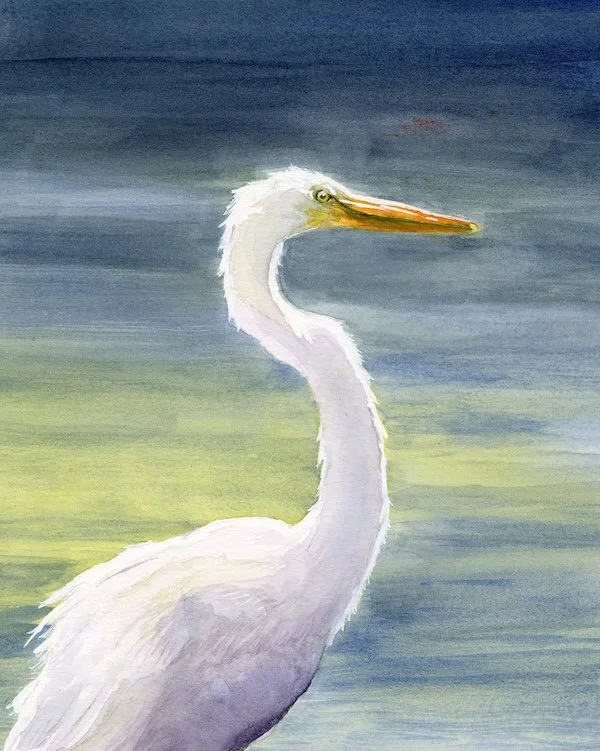
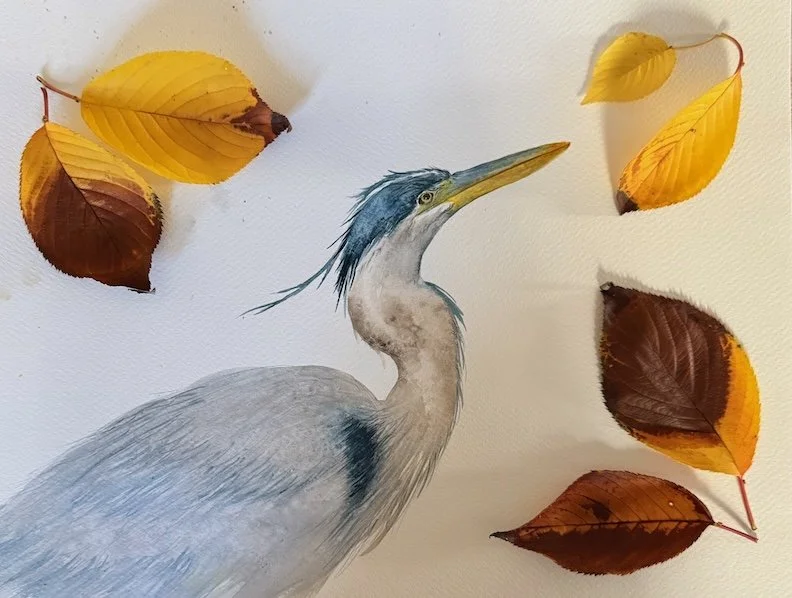
This paper has really been growing on me. Similar to Arches above. I used this to paint Summer Nasturtiums and the egret in my Birds and Pollinators Gallery.
LED light pad, A4 Ultra-Thin with Dimmable Brightness
Obviously, this isn’t paper, but it was an absolute game-changer for me. Before I got a light pad, I was so too cautious about drawing directly on watercolor paper. I was afraid to mess up my drawing and waste expensive watercolor paper, to mess up the tooth of the paper if I needed to erase, etc. That limited what I was willing to try. Now, I work up designs on basic Strathmore Sketch paper and then use this box to trace my design directly (and lightly) on watercolor paper. It’s easy to use, less expensive than many, and works well with the 9 × 12” sketch and watercolor papers I recommend. For me, this was an excellent purchase.
-
Kingman Turquoise Watercolor Paint by Daniel Smith is a beautiful granulating paint made from one of my favorite stones. The color shifts and separates in fascinating ways as it dries and was central to my painting Maple Leaves with Kingman Turquoise.
Aureolin W239 Watercolor Paint by Holbein is a paint I learned about this color when I attended a workshop by Margie Samuels. It’s a calm, glowing yellow that tends to push away other colors (at least the paints I use). I used this plus Quinacridone Gold by Daniel Smith for the background on my Summer Nasturtiums watercolor painting.
-
I highly recommend these quality Meeden Palettes with Mixing Trays for their well sizes and mixing tray. The paint has never beaded on these when I’ve used them and the mixing trays are quite large. Both of these things matter when you are trying to see your mixes and dilutions. These trays are a basic, daily-use supply and worth the money. Don’t go for the cheaper trays you see.
-
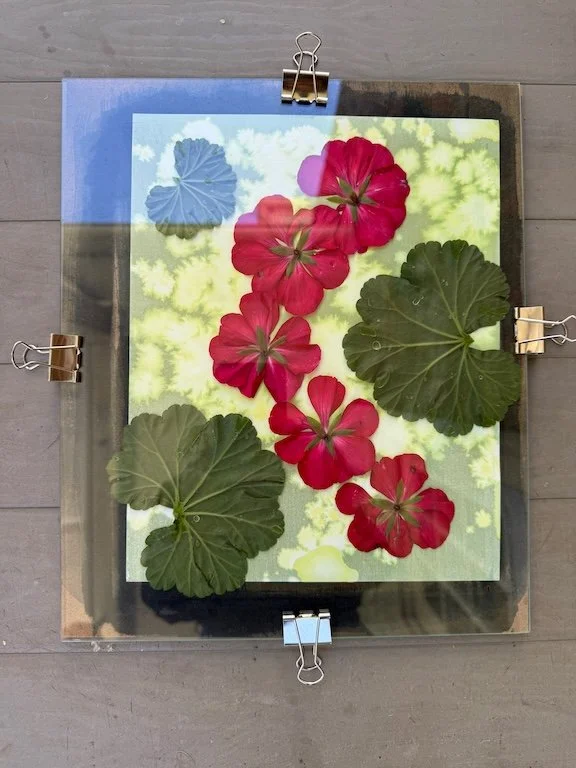
Cyanotyping is more approachable than you might think. In addition to the items below, I also use inexpensive plastic trays that I got with cut fruit.
Beyond trays, you will need:
Jacquard Cyanotype Kit — This kit contains everything needed to begin experimenting with cyanotype on paper. I used it for my earliest prints and did not need any additional supplies until I decided to continue with the process.
Hahnemuhle Platinum Rag Fine Art Paper (8 x 10", 25 Sheets) — I use this is paper for both traditional and wet cyanotype processing. The 8 × 10 size fits the glass and backing included in the Jacquard starter kit, and the heavier paper stands up well to wet techniques. I used this for my Japanese Anemone in Wet Cyanotype.
Jacquard Cyanotype Sensitizer Set — Once you're finished with the starter kit, these solutions allow you to continue making your own coated papers. You can purchase the chemicals individually or as a set.
-
This list may seem long, but these basics last a long time and will really help you get better results. Some are quite inexpensive, and I use all of them to create drawing like you see here.
Strathmore 200 Series Sketch pad — This inexpensive sketch pad is where many of my ideas begin. I use it to plan compositions, practice techniques, and prepare drawings before transferring them to watercolor paper.
Strathmore Drawing Pad, 9x12 inches — This is a basic artist paper with nice tooth. I like it very much for finished work (e.g., Skipper Butterfly on Key).
Faber-Castell Castell 9000 Artist Pencils in Metal Tin — This set provides a useful range of hardnesses for everything from light construction lines to deep shadows. I've used mine for years in drawings such as Dogwood in my Botanicals Gallery and the Wren and Chickadee in my Birds and Pollinators Gallery. The tin is convenient for keeping them organized and the hexagonal barrel prevents them from rolling away. The range of hardnesses lets you vary the degree of softness or sharpness by changing the pencil. That lets you flex across crude lines, shadows, mid-tones, etc.
STAEDTLER Mars Lumograph HB Graphite Art Drawing Pencil, 6 Pencils — These are my favorite pencils for preliminary sketches and planning drawings. The hexagonal barrels are comfortable to hold and stay put on the table instead of rolling away.
STAEDTLER Double-Hole Tub Pencil Sharpener: Dual Size Manual Sharpener for Standard Graphite & Colored Pencils — This is by far the best sharpener I've found for both graphite and colored pencils. It sharpens cleanly without breaking delicate colored pencil cores. Highly recommended.
Lyra Drawing Art Kneading Erasers with Case - Gray — These work beautifully for lifting graphite, softening edges, and even removing transfer lines from watercolor paper before painting.
Pentel Super Hi-Polymer Eraser, Large, Nonabrasive, White — Sometimes a simple white eraser is exactly what is needed. This one erases cleanly without discoloring the paper.
-
Colored pencil work can be amazingly elegant and realistic. Depending on your budget and how far you want to take it, I have these recommendations.
Caran d’Ache Luminance colored pencils — I use these colored pencils for high-quality finished work. The colors are rich and complex, though I suspect many artists would be perfectly happy starting with a smaller set before committing to a larger collection. The handles have a beautiful, comfortable wood exterior. They are available as a set of 100 or a smaller set of 40. I used the set of 100 to make my Skipper Butterfly drawing.
My oldest set of colored pencils in the Derwent 12 Artists set. I can take you very far. I used it for my drawing 1998 Pansies.